
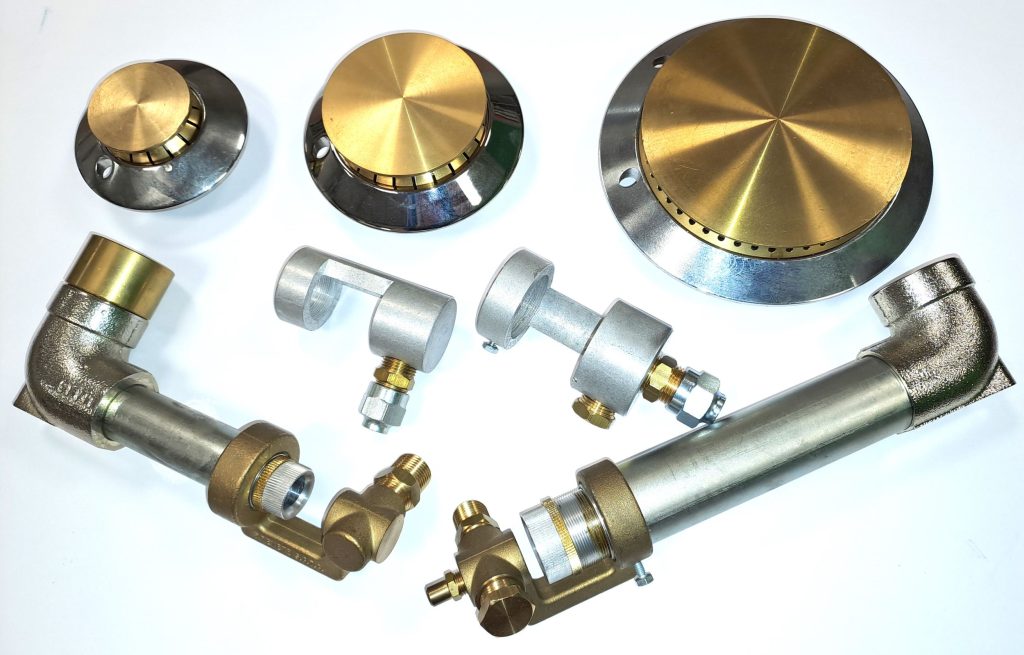
In a context where energy savings have become a priority for professionals in the restaurant and food industry, optimizing your cooking equipment is essential. Professional cooking gas burners, long used with a permanent pilot light or a permanent auxiliary burner, are now being redesigned to meet the challenges of energy performance and energy consumption reduction.
The pilot light or auxiliary burner in permanent operation, although practical, consumes gas, even outside the cooking period. This energy waste is becoming remarkable for the profitability and environmental impact of professional kitchens. Fortunately, evolving technologies provide reliable solutions to eliminate this overconsumption, without compromising safety or performance.
AEM Burner has designed professional cooking gas burners
adapted to current needs in terms of consumption, safety and reliability, without forgetting to respect the suitability for the function. Thanks to available and in some cases associated technologies, it is now possible to significantly reduce operating costs while reducing the environmental impact of gas appliances.
In this article, we explain why and how to reduce your gas consumption by rethinking the use of the permanent pilot light, the use of intermittent auxiliary burners, and what are the best alternatives available on the market?
Why the permanent night light is energy-intensive
Continuous operation that increases the bill
The permanent pilot light is a small burner of 250W max that stays on continuously to facilitate the lighting of the main burner. If the power is more than 250W, it becomes an auxiliary burner. While this system has long been appreciated for a quick transition to maximum heating, it has the disadvantage of consuming gas throughout the service, even when the main burner is not in use. This unnecessary but constant consumption represents an average of 750 kW per year per pilot light, which directly impacts the operating costs of cooking. Knowing that a standard cooking appliance contains 5 night lights mostly.
A concrete example: the impact on a collective kitchen
Let’s take the example of a central kitchen equipped with 10 burners with a permanent pilot light. This represents an average of 750 kW per year. Depending on the type of gas used, this can reach an amount of several hundred euros. Knowing that the majority of burners in professional cooking are equipped with auxiliary burners with a power of more than 250W, the consumption is much higher. This simple observation shows that the permanent pilot light, in addition to being energy-consuming, is no longer adapted to the requirements of reducing CO2 emissions.
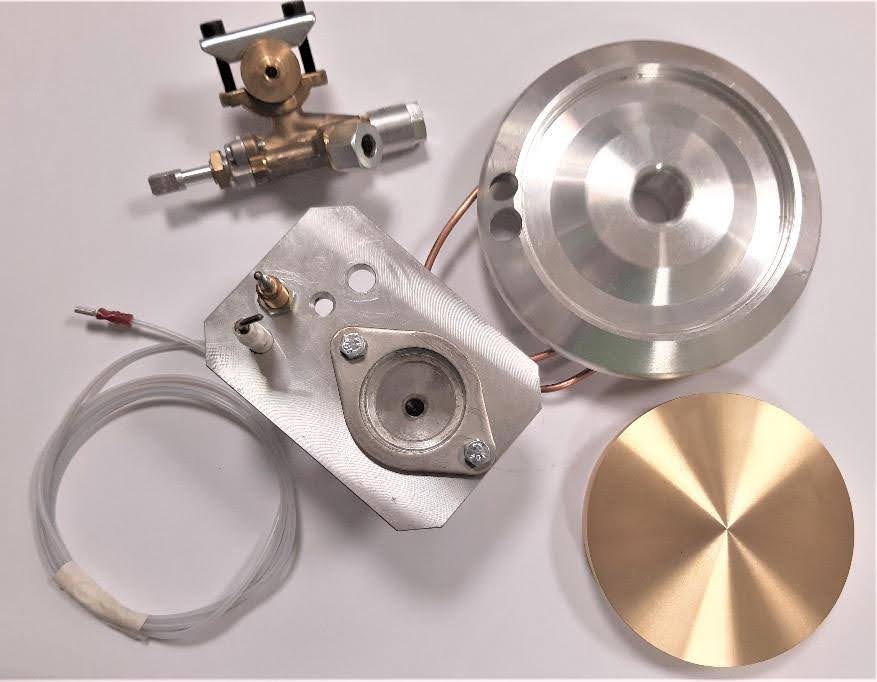
Semi pro SP100 burner with electrode and and monitoring thermocouple flat support.
Les alternatives pour un contrôle direct d’un brûleur gaz
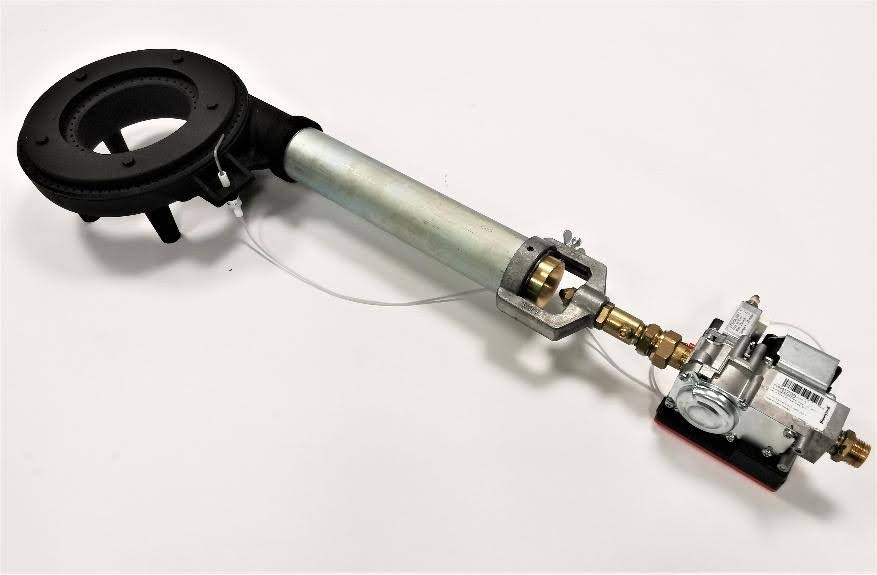
Brûleur couronne FV240-30 équipé du bloc de contrôle de flamme automatique à 2 allures de chauffe pour marmite à cuve ronde de 200l.
Piezoelectric ignition and electronic flame control : towards controlled consumption
To suppress indirect ignition of a burner by a permanent pilot light or auxiliary burner, a direct flame monitoring system must be installed on the burner. If the technology used is the thermo-element of a manual safety device, it is preferable to combine it with a piezoelectric ignition, operated manually each time the burner is commissioned. Even more advanced is the automatic electronic flame controller that integrates spark train ignition and allows the combination of servos to reduce energy consumption. These technologies must be used wisely while respecting the suitability for the function. They also reduce the cost of manufacturing the gas appliance.
Example of equipment optimized by AEM Burner
AEM Burner, integrates these alternatives into its gas heating equipment for professional cooking and agri-food. For example, our range of automatic burners without a permanent pilot light, combined with servos to optimise the rational use of energy, enabled a school kitchen to reduce its gas consumption for cooking by nearly 15% in one year. This type of solution is perfectly adapted to the constraints of professionals, while respecting the gas and electrical safety standards in force.
Economic and environmental benefits of optimised burners
Cost Reduction and Efficiency Improvement
Adopting professional cooking gas burners without a permanent pilot light allows a reduction in appliance costs and a significant reduction in energy consumption. It requires the user to adapt again and to change the habits of traditional cooking: the burner is lit only when the heating is needed. The automatic ignition and flame control technologies offer ergonomics that facilitate the operation of a gas appliance and better control of the rational use of energy, activating the burner only when necessary and for the most efficient applications, adapting the power according to the cooking process. The result: optimized energy efficiency and a quick return on investment.
Less emissions, more sustainable commitment
Beyond the financial aspect, these modern burners also contribute to the reduction of the carbon footprint. Less gas burned unnecessarily also means less CO₂ emissions released into the atmosphere. This commitment to energy sobriety is fully in line with companies’ CSR approaches and compliance with current environmental regulations.
Thus, the optimized burners offered by Brûleur AEM make it possible to reconcile performance, economy and suitability for function, while guaranteeing the safety and reliability essential in the professional environment. It is certain that to reduce the environmental impact even more, the use of biogas or hybrid gas + hydrogen, is the solution available today while perhaps waiting for 100% hydrogen operation.
How to choose an efficient professional cooking gas burner
Essential criteria to be taken into account
To choose the right professional cooking gas burner, it is essential to consider several elements:
- The type of ignition : choose models without a permanent pilot light with piezo ignition or electronic flame controller.
- Heat output : expressed in KWh, it must be adapted to your production volumes and operating performance.
- Compatibility with your existing installations (type of gas, pressure, safety system).
- Ease of maintenance : an easily removable burner ensures quick cleaning and limits the risk of malfunction.
A perfect gas burner must combine performance, suitability for function, safety, energy saving and sustainability.
FAQ & Conclusion
Frequently Asked Questions (FAQs)
Because it consumes gas continuously, even outside the cooking period. By removing it, you reduce your costs and environmental impact and reduce the risk of malfunction.
Yes, it provides ease of use and avoids the risk of burning the user when manually lighting with a lighter for example. When using an automatic flame control, this ignition function is integrated.
Only burners for open fireplaces have a specific design adapted to the use or not of a permanent night light. Otherwise, our gas heating equipment is overwhelmingly equipped with a direct flame control system.
No, contrary to popular belief, the permanent pilot light when it is used, is only the mini burner integrating the flame monitoring system
Conclusion
Professional cooking gas burners without a permanent pilot light offer many advantages: lower energy consumption, simplification of the manufacture of gas appliances while complying with current standards, improved ergonomics and reduced risks for the user. Thanks to its expertise, Brûleur AEM supports professionals in the transition to more efficient and sustainable solutions.
Contact us now to learn more or benefit from our services.